About

What is UNESCO?
UNESCO (United Nations Educational, Scientific and Cultural Organization) aims to build world peace and security by fostering international cooperation in education, science, culture, and communication, promoting justice, human rights, and sustainable development through shared knowledge, heritage preservation, and tackling global challenges like climate change, inequality, and misinformation. As a platform for ideas, it acts by setting standards, creating tools, and building networks to create inclusive, resilient societies.

UNESCO Sites
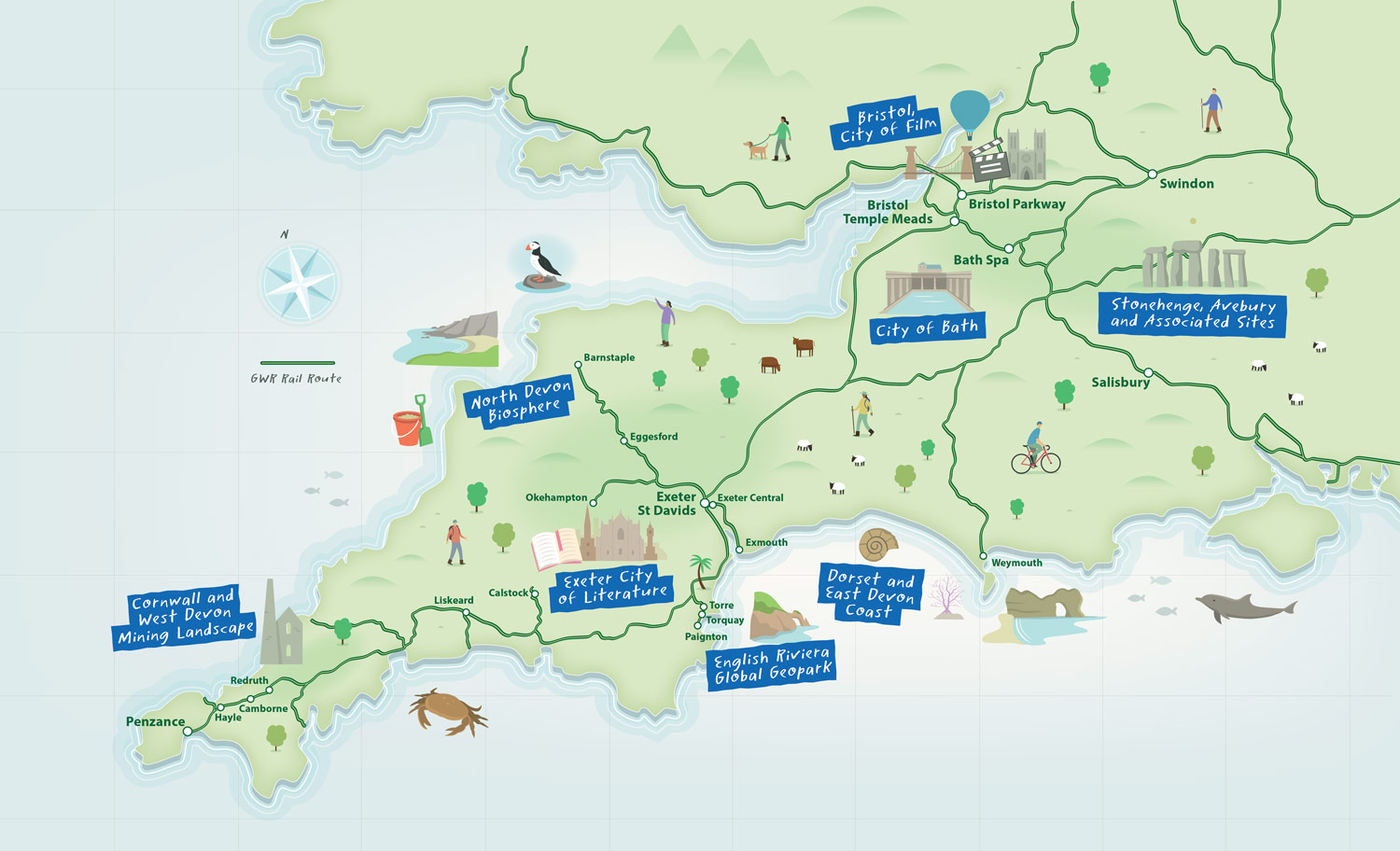
Eight UNESCO designated sites across the South West of England have joined together with GWR in this exciting initiative to encourage visitors to explore their areas using sustainable travel. Each site has carefully curated bespoke two-day trails leading from their train stations and using public transport to access beautiful, culturally-rich activities and destinations.
This has been made possible through UNESCO’s Local to Global programme which is funded by The National Lottery Heritage Fund to connect over 60 designated sites—including Biospheres, Geoparks, Creative Cities, and World Heritage Sites—to foster sustainability, resilience, and community-led action. The initiative connects local action to UN Sustainable Development Goals (SDGs) and the 2030 Agenda, fostering peace and sustainable development.
Explore More
To discover more about the eight individual UNESCO sites involved with this initiative, explore their websites:
UNESCO Sites
North Devon UNESCO Biosphere Reserve |
Visit | |
English Riviera Global Geopark |
Visit | |
Bristol UNESCO City of Film |
Visit | |
Cornwall and West Devon Mining Landscape World Heritage Site |
Visit | |
Exeter UNESCO City of Literature |
Visit | |
City of Bath and Great Spa Towns of Europe UNESCO World Heritage Site |
Visit | |
Dorset and East Devon Coast: The Jurassic Coast World Heritage Site |
Visit | |
Stonehenge, Avebury and Associated Sites World Heritage Site |
Visit |